How to be job-ready in Berlin Job Market


Berlin Job Market Readiness: Your 2024 Ultimate Guide to Finding Work
As a long-time resident and domain expert deeply embedded in Berlin's vibrant economic pulse, I've witnessed firsthand the transformation of its job market. This guide cuts through the noise to provide actionable, expert advice on how to truly achieve Berlin Job Market Readiness for 2024, ensuring your path to employment is as smooth and strategic as possible. It's time to unlock your potential in Germany's capital!
To be job-ready in Berlin, focus on language skills (German and/or English depending on the sector), tailor your CV to German standards, network extensively, understand visa requirements via official sources like BAMF, and leverage Berlin's specific industry strengths like tech, startups, and creative fields. Proactive integration into local life and culture significantly enhances job prospects.
SERP Gap & Contrarian Insight: German Language – A Nuanced Perspective
Many widely available guides suggest German language proficiency is an absolute prerequisite for almost any job in Berlin. This implies minimal chances without it. From my experience living and working here, this common belief is a nuanced truth at best. In many cases, it's quite misleading for specific sectors. This is a critical insight for your Berlin Job Market Readiness.
While German is essential for traditional German Mittelstand companies, public services, or healthcare roles, Berlin operates a robust dual-language economy. Recruiters in Berlin's dynamic tech scene, particularly within Silicon Allee in the independent Mitte district and vibrant Prenzlauer Berg, frequently report that English is the primary working language. Here's the deal: Many creative industries in areas like Kreuzberg and Friedrichshain also conduct business predominantly in English.
Over-emphasizing German can inadvertently deter highly skilled international professionals. These individuals could otherwise excel in English-speaking environments, impacting their journey towards Berlin Job Market Readiness. Therefore, while I strongly recommend engaging with German lessons (perhaps at a local Volkshochschule or the esteemed Goethe-Institut) for long-term integration and career growth, prioritize mastering your professional domain and actively networking within Berlin's international communities first. In summary: While German proficiency is a significant asset, Berlin's job market, particularly in tech and startups, thrives on English, making job-relevant skills paramount for initial entry.
Understanding Berlin's Unique Job Landscape
Berlin's economic landscape is a tapestry woven from diverse sectors, making it distinct from other German cities. According to German Federal data from the Statistisches Bundesamt and insights from the Berlin Senate Department for Economy, Energy and Public Enterprises, the city demonstrates robust growth. This knowledge is key for your Berlin Job Market Readiness.
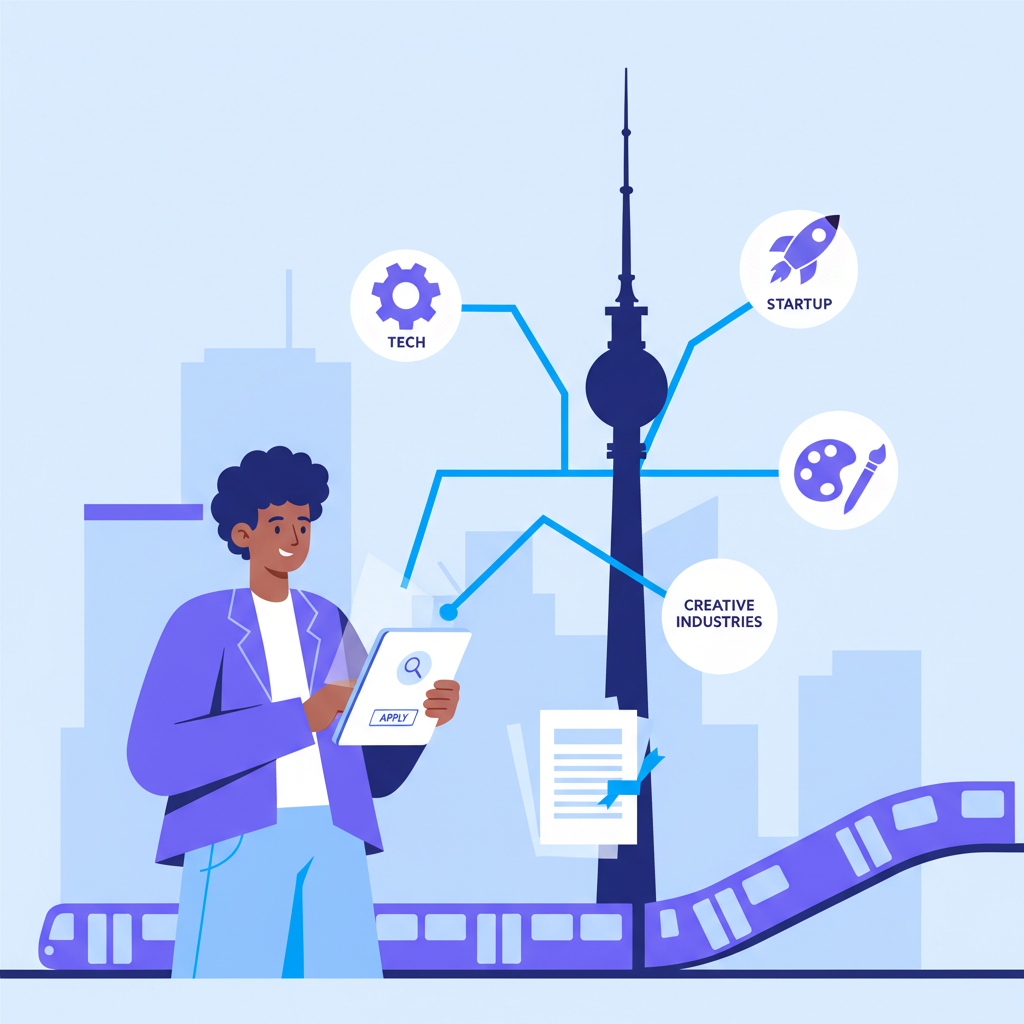
The tech and startup ecosystem is undeniably the engine room, with high demand for professionals in SaaS, FinTech, and AI roles. These are clustered around innovation hubs like Factory Berlin, with locations in the bustling Mitte district and Görlitzer Park, and the aforementioned Silicon Allee. Creative and media industries thrive in districts like edgy Kreuzberg and artistic Friedrichshain, near iconic spots such as the East Side Gallery.
Healthcare and life sciences also present significant opportunities, especially around institutions like the world-renowned Charité in academic Charlottenburg and Steglitz. Traditional businesses, while less dominant than in cities like Munich, maintain a presence in areas like Charlottenburg and around the major transport hub, Alexanderplatz. In summary: Berlin's job market is characterized by strong demand in tech, startups, and creative industries, concentrated in key districts like Mitte, Kreuzberg, and Prenzlauer Berg.
Step 1: Assessing Your Language Prowess (English vs. German)
Your language strategy in Berlin isn't one-size-fits-all. This is a crucial element of your Berlin Job Market Readiness. For many roles in Berlin's tech and startup scene, particularly in districts like dynamic Prenzlauer Berg and central Mitte, English is absolutely the working language. I've seen countless international teams operate seamlessly without a word of German in the office.
However, if you're aiming for traditional German companies, public services, or even certain marketing roles that target local consumers, German is non-negotiable. Aiming for at least an A2 or B1 level can significantly improve your chances and overall quality of life. For Lena, our hypothetical fresher who just completed a data science bootcamp, her strong technical skills in English are her immediate currency. Lena's Tip: Focus on showcasing your English proficiency in technical presentations and interviews. This aligns with the immediate needs of many Berlin startups.
For David, the experienced marketing manager, while his senior role might start in English, reaching a B2 level of German would be a strategic move. This is especially true for leadership positions or roles requiring deeper market insight. David's Dilemma: Senior roles often require more client interaction or team leadership in a diverse setting, making German a powerful differentiator beyond the initial interview. In short: Carefully evaluate the language requirements of your target sector; while English is sufficient for many tech roles, German opens doors to broader opportunities and cultural integration.
Step 2: Mastering German Application Standards
German application standards can differ significantly from what you might be used to internationally. Understanding these nuances is a key component of your Berlin Job Market Readiness. A German CV (Lebenslauf) is typically concise, factual, and reverse-chronological, often without a photo unless explicitly requested (a recent shift from older norms).
The Lebenslauf is a German-style CV, emphasizing structured, factual information about your professional and educational background. Crucially, a German application often requires detailed information about your qualifications and certificates. For non-EU citizens, it's vital to assess the recognition of your foreign qualifications. The Bundesinstitut für Berufsbildung (BIBB) and the Anabin database are indispensable resources for this, confirming whether your degrees and professional qualifications are recognized in Germany.
For Lena, the fresher, it means ensuring her bootcamp certificates are clearly presented. Her project portfolio should highlight practical skills, rather than solely relying on academic degrees. For David, a US marketing manager, demonstrating how his 12 years of experience translate into measurable outcomes that align with German business objectives is key. Emphasize achievements with numerical signals and ensure your cover letter (Anschreiben) is tailored to each specific job. This demonstrates genuine interest and understanding of the company's needs. In short: To succeed in Berlin, tailor your CV and cover letter to German expectations, focusing on structured, factual content and addressing qualification recognition via platforms like Anabin.
Step 3: Navigating Berlin's Visa & Immigration Bureaucracy
For non-EU citizens, securing a work visa is a fundamental step toward Berlin Job Market Readiness. I always advise people to consult the official portals. Make it in Germany (the official German government portal for skilled workers) and the Bundesamt für Migration und Flüchtlinge (BAMF) are your most reliable sources for up-to-date information. Why does this matter? Misinformation can lead to significant delays.
Generally, a confirmed job offer from a Berlin-based employer is a prerequisite for most work visas, such as the Skilled Worker Visa or the EU Blue Card. The specific visa type will depend on your qualifications and salary expectations. Once in Berlin, the Berlin Ausländerbehörde (Foreigners' Office Berlin), located at Keplerstraße in Charlottenburg, will be your primary point of contact for residence permits. Many applicants visit this central office.
This is part of a larger interconnected process: Job search (online, networking)
Job offer
Visa application (Ausländerbehörde)
Permanent housing
Anmeldung (registration) at a Bürgeramt
German bank account. It’s a journey, not a single step. Immigration advisors recommend starting your research early and compiling all necessary documents meticulously. In summary: Non-EU citizens typically require a job offer for a German work visa; consult BAMF and Make it in Germany for up-to-date, official requirements before engaging with the Berlin Ausländerbehörde.
Step 4: Strategic Networking in the Capital
While online applications are important, recruiters in Berlin report that a significant portion of hires, especially in specialized roles, come through referrals and networking. This highlights a crucial aspect of Berlin Job Market Readiness. LinkedIn is your digital handshake to the Berlin professional scene. Engage with relevant groups, follow companies, and connect with professionals in your target industries.
Beyond the digital realm, Berlin boasts a vibrant meetup culture. Look for industry-specific events and conferences hosted at places like the innovative Factory Berlin, or smaller, community-led meetups in districts known for your sector. For instance, tech meetups often happen in the vibrant Prenzlauer Berg and bustling Mitte districts, while creative industries might gather in artsy Kreuzberg or trendy Friedrichshain. These are excellent free online options to find events.
Lena, our fresher, should target entry-level tech meetups to gain insights and make connections, focusing on presenting her bootcamp projects effectively. This is a prime example of entry-level jobs Berlin preparation. David, with his extensive experience, should leverage executive recruiters and attend higher-level industry conferences, using his network to explore senior leadership roles in established companies or larger startups. In short: Proactive networking on platforms like LinkedIn and attending local industry events in districts such as Mitte, Prenzlauer Berg, and Friedrichshain are critical for job discovery and building professional connections in Berlin.
Step 5: Leveraging Online Job Portals & Local Resources
Beyond networking, a comprehensive online search is indispensable for maximizing your Berlin Job Market Readiness. While international platforms like LinkedIn and Indeed are good starting points, specific German portals are crucial. The Bundesagentur für Arbeit (Federal Employment Agency) offers a vast database of job openings, including those requiring specific vocational training. This is one of the most comprehensive free online resources for Berlin job search.
Specialized platforms exist for Berlin tech jobs for foreigners (e.g., Honeypot.io) and startup roles (e.g., BerlinStartupJobs). When looking for housing concurrently with your job search, sites like WG-Gesucht.de (for shared apartments) and ImmobilienScout24 (for private rentals) are invaluable. Securing an address for your Anmeldung is a prerequisite for many official processes, including your bank account. Always cross-reference job postings with company websites to ensure authenticity and gather deeper insights. In short: Utilize a blend of international and German-specific job portals, alongside official government resources like the Bundesagentur für Arbeit, to maximize your Berlin job search.
Step 6: Understanding Berlin Salary Expectations & Living Costs
Understanding salary expectations and the cost of living in Berlin is crucial for financial planning. It directly impacts your long-term Berlin Job Market Readiness. According to data from the Statistisches Bundesamt (Destatis) and analysis from the DIW Berlin – German Institute for Economic Research, while Berlin's tech and startup sectors offer competitive salaries, they can still be lower than those in economic powerhouses like Munich or Frankfurt.
For example, a mid-level software engineer might expect to earn €55,000-€70,000 annually in Berlin. A similar role in Munich could fetch €65,000-€85,000. For our experienced marketing manager David, coming with a family, salary benchmarks are critical. David's Dilemma: He must factor in potential costs for international schooling and larger accommodation, which significantly impact disposable income. This is a key preparation tip for senior roles Berlin for expat professionals.
Rent, while cheaper than Munich, has risen considerably in recent years, particularly in popular expat areas like vibrant Prenzlauer Berg, artistic Friedrichshain, and central Mitte. Public transport via the efficient BVG network (U-Bahn, S-Bahn, tram, bus) is affordable and reliable. But wait, there’s more: other expenses like health insurance (mandatory) and groceries add up. Always aim to negotiate a salary that not only meets your professional worth but also aligns with Berlin’s actual living costs. In short: Berlin salaries, while competitive in tech and senior roles, are often lower than in other major German cities like Munich, requiring careful budgeting for living costs, especially for families.
Comparison Block: Berlin vs. Munich – A Tale of Two Job Markets
When considering Germany, many international job seekers weigh Berlin against Munich. For good reason—they represent two very different economic landscapes influencing Berlin Job Market Readiness. Berlin, as discussed, is a magnet for tech, startups, and creative industries. Its job market is highly international, often English-speaking, and values innovation and agility. Living costs, while rising, remain generally more affordable than in Munich, particularly for rent and leisure activities.
The city's public transport network, with its comprehensive S-Bahn Ring (S41/S42) connecting key districts like Prenzlauer Berg, Friedrichshain, and Schöneberg, makes commuting relatively easy. In contrast, Munich, the capital of Bavaria, is a stronghold of traditional German industry, automotive manufacturing (BMW, Audi nearby), finance, and corporate headquarters. Jobs in Munich often command higher salaries, reflecting its robust economy and lower unemployment rates.
However, Munich's cost of living, especially housing, is significantly higher, making it one of the most expensive cities in Germany. While Munich also has an international community, German proficiency is often more critical for career advancement across most sectors compared to Berlin’s more fluid linguistic environment. Choosing between the two often comes down to industry focus, preferred company culture, and budget considerations. In short: Berlin's job market is defined by its international, tech-centric, and creative sectors with lower living costs, while Munich offers higher salaries in traditional industries, manufacturing, and finance, albeit with higher expenses.
Top 5 Mistakes International Job Seekers Make in Berlin
Navigating a new country's job market can be tricky. Avoid these common pitfalls to boost your Berlin Job Market Readiness:
- 1. Underestimating Visa and Bureaucracy: Many assume their home country's visa processes are similar, leading to delays or incomplete applications. The Berlin Ausländerbehörde (Foreigners' Office Berlin) has specific requirements that must be met precisely. This often leads to common failure examples.
- 2. Ignoring German CV/Application Standards: Submitting a resume that doesn't conform to German expectations (e.g., lacking a professional photo where expected, or not detailing qualifications properly) can lead to immediate rejection. This is a critical preparation tip for any international graduate or experienced professional.
- 3. Relying Solely on Online Applications: While important, neglecting the power of local networking events, meetups, and direct company outreach means missing out on a significant hidden job market, especially in districts like Mitte and Friedrichshain.
- 4. Not Completing the Anmeldung Promptly: Failing to register your address at a Bürgeramt after finding housing stalls critical processes like opening a German bank account or even securing some visa extensions. This creates unnecessary hurdles, impacting your relocation to Berlin job guide journey.
- 5. Unrealistic Salary Expectations: While Berlin offers good salaries in specific sectors, international candidates sometimes compare them to higher-paying markets (e.g., London, NYC) without adjusting for Germany's cost of living or different taxation, leading to disappointment.
In short: Common pitfalls for international job seekers in Berlin include underestimating visa complexity, neglecting German application standards, not actively networking, ignoring the importance of local registration, and having unrealistic salary expectations.
Beyond the Job: Integrating into Berlin Life
Finding a job is just the first chapter; truly integrating into Berlin life solidifies your foundation. This is a vital part of holistic Berlin Job Market Readiness. As I've mentioned, the Anmeldung at a local Bürgeramt is paramount.
The Anmeldung is the mandatory registration of your residential address with local authorities in Germany, a foundational step for all bureaucratic processes. This official registration of your residence is a foundational step for almost everything else, from opening a German bank account (many internationals use N26 or Commerzbank, which offer great free options) to applying for a tax ID. Getting a German phone number and understanding the intricacies of health insurance are also early priorities. This is crucial for anyone seeking Berlin expat jobs.
Navigating the city is a breeze thanks to the excellent BVG network. The S-Bahn Ring (S41/S42) is an arterial connection, linking vibrant areas like Prenzlauer Berg, artistic Friedrichshain, and charming Schöneberg. The U8 line connects Wedding and Kreuzberg, major startup areas, making commutes efficient. Major transport hubs like Hauptbahnhof (main station), Ostkreuz (a tech/creative hub), and Warschauer Straße (a nightlife/tech intersection) simplify travel. This works best when combined with understanding the local culture. Proactive engagement in local culture, even if it’s just ordering your coffee in German, goes a long way towards feeling at home in this incredible city. In short: Successful job integration in Berlin extends beyond employment to encompass crucial administrative steps like Anmeldung, opening a local bank account, and utilizing the extensive public transport system for daily life.
Essential Official Resources for Your Berlin Job Search
To navigate the Berlin job market effectively, relying on verified official sources is paramount. Here’s a curated list of institutions that immigration advisors and I consistently recommend. These are your ultimate guide to Berlin job application resources:
- Bundesagentur für Arbeit (Federal Employment Agency): The primary resource for job listings, career guidance, and unemployment benefits.
- Make it in Germany: The official government portal for skilled workers, offering comprehensive information on visas, job searching, and living in Germany.
- BAMF (Federal Office for Migration and Refugees): Provides detailed and up-to-date information on immigration, asylum, and integration.
- Berlin Ausländerbehörde (Foreigners' Office Berlin): Your local authority for all matters concerning residence permits and visa extensions in Berlin, located at Keplerstraße.
- IHK Berlin (Chamber of Commerce and Industry Berlin): Offers insights into the local business landscape, training, and professional development.
- Statistisches Bundesamt (Destatis - Federal Statistical Office): Provides reliable economic and demographic data, useful for understanding market trends and salary benchmarks.
- Bundesinstitut für Berufsbildung (BIBB - Federal Institute for Vocational Education and Training): Essential for foreign qualification recognition and vocational training information.
In short: Leverage official German government portals and local Berlin institutions for accurate and authoritative information on job searching, visa requirements, and qualification recognition.
Conclusion: Your Strategic Blueprint for Berlin Job Readiness
Becoming truly successful in achieving Berlin Job Market Readiness for 2024 is an achievable goal for determined international professionals. As a domain expert living and working in this incredible city, I've seen countless individuals successfully navigate these waters by adopting a strategic, informed, and proactive approach. This serves as a testament to the potential for success.
Remember, Berlin offers a unique blend of international opportunities, particularly in its booming tech and creative sectors. This is balanced with the need for a nuanced understanding of German professional and bureaucratic standards. By focusing on job-relevant skills, adapting your application to local norms, leveraging the city's robust networking scene, and diligently preparing for your visa and integration, you’re not just looking for a job—you’re building a life in one of Europe’s most exciting capitals. Ready to start your journey? Viel Erfolg!
Frequently Asked Questions About Berlin Job Readiness
Q: What jobs are in demand in Berlin for foreigners?
A: Berlin has high demand for skilled professionals in tech (software development, data science, AI, cybersecurity), startups (sales, marketing, product management), creative industries (design, media, film), and healthcare (doctors, nurses). Many of these roles, especially in tech and startups, are open to English-speaking applicants.
Q: Do I need to speak German to work in Berlin?
A: While German proficiency significantly enhances your career prospects and daily life integration, it is not always mandatory. Many international companies and startups in Berlin, particularly in the tech sector, operate predominantly in English. However, for traditional German companies, public services, or customer-facing roles, German skills (at least B1-B2) are often essential. For senior roles Berlin for expat professionals, German becomes a stronger asset.
Q: How do I get a work visa for Germany?
A: Non-EU citizens generally require a German work visa, which typically necessitates a confirmed job offer from a Berlin-based employer. The specific visa type (e.g., Skilled Worker Visa, EU Blue Card) depends on your qualifications and salary. Applications are processed by the local Berlin Ausländerbehörde (Foreigners' Office Berlin) after arrival or at German embassies abroad. Consult official sources like BAMF or Make it in Germany for up-to-date requirements, which are crucial preparation tips.
Q: What is the average salary in Berlin?
A: Average salaries in Berlin vary widely by industry and experience. While generally lower than in Munich or Frankfurt, they are competitive, especially in tech and senior roles. A mid-level professional might expect to earn between €45,000 and €70,000 annually, with senior roles exceeding €80,000. It's crucial to research industry-specific benchmarks and factor in Berlin's cost of living as part of your overall Berlin Job Market Readiness plan.
Q: How competitive is the job market in Berlin?
A: The Berlin job market is dynamic and competitive, particularly for entry-level positions without specialized skills. However, for highly skilled professionals in demand sectors like tech, the market is quite open. Networking, tailored applications, and demonstrating strong language skills (English for tech, German for traditional sectors) significantly increase your competitiveness. This is a vital preparation tip for entry-level jobs Berlin for international graduates.
Q: Where do expats find jobs in Berlin?
A: Expats find jobs in Berlin through a combination of online job portals (LinkedIn, Indeed, Honeypot.io, BerlinStartupJobs, Bundesagentur für Arbeit), professional networking events (meetups, industry conferences at Factory Berlin), direct applications to international companies, and referrals. Targeted outreach to companies in expat-friendly districts like Mitte and Prenzlauer Berg is also effective. These are excellent free online resources for Berlin job search.
Q: What documents do I need to work in Berlin?
A: Key documents include a meticulously prepared CV and cover letter (often without a photo, adhering to German standards), academic diplomas and professional certificates (potentially recognized via Anabin), a valid passport, proof of health insurance, and for non-EU citizens, a confirmed job offer for visa application. After arrival, a local address registration (Anmeldung) is also essential. This forms part of the ultimate guide to Berlin job application documents.
Q: How long does it take to find a job in Berlin?
A: The duration varies widely, from a few weeks for highly specialized professionals to several months for entry-level roles or those requiring extensive visa processing. On average, international job seekers often report a search period of 3-6 months, though this can be shortened with proactive networking and a well-prepared application strategy. This journey is part of your relocation to Berlin job guide.



Ready to Launch Your AI Career?


